
5 Questions to Ask Before You Sign a Laboratory or Medical Equipment Quote
In short: Before you sign a quote for laboratory or medical equipment, look beyond the price. Ask what installation includes, who services the equipment and how fast, what it will cost to keep running, how your team will be trained, and whether the quote matches your requirements.
A new instrument arrives on time and on budget. Six weeks later, it is still not running. The room is too humid, the power supply was never checked, and the one person trained to use it has moved on. Nothing was wrong with the equipment. What went wrong was everything around it.
Scientific and medical equipment is usually judged on specification and price. But across Southeast Asia, where site conditions, regulations and access to support vary from market to market, what decides whether equipment performs is often not on the spec sheet at all.
Before you sign, here are five questions worth asking, and what a good answer looks like.
1. What does installation actually include?
“Installation” can mean anything from unpacking the unit to full site preparation and commissioning. For larger equipment especially, a lot needs to be checked before delivery day.
A pre-installation site walk should confirm the route from the delivery point to the final location: doorways, corridors, cargo lift size and weight limits, and floor loading, or bench capacity for benchtop units. Required utilities such as power, drainage and compressed air need to be in place, and the space itself may need clearing, sometimes by removing older equipment first. Some sites also require permits or safety briefings before any on-site work.
Operating conditions matter too. Temperature and humidity requirements are usually on the spec sheet, but it is worth checking that they hold around the clock. Some labs switch off the air-conditioning at night, which can affect sensitive instruments.
For laboratories, ask whether installation and operational qualification (IQ/OQ) are included. These are typically provided by the manufacturer, so check what is covered and how long it will take, since you will need the documents for ISO/IEC 17025 or GMP audits. Facility works are usually the customer’s responsibility, so agree early who prepares what.
What good looks like: a pre-installation site walk, a written list of site and utility requirements before you place the order, and qualification documents handed over at installation.
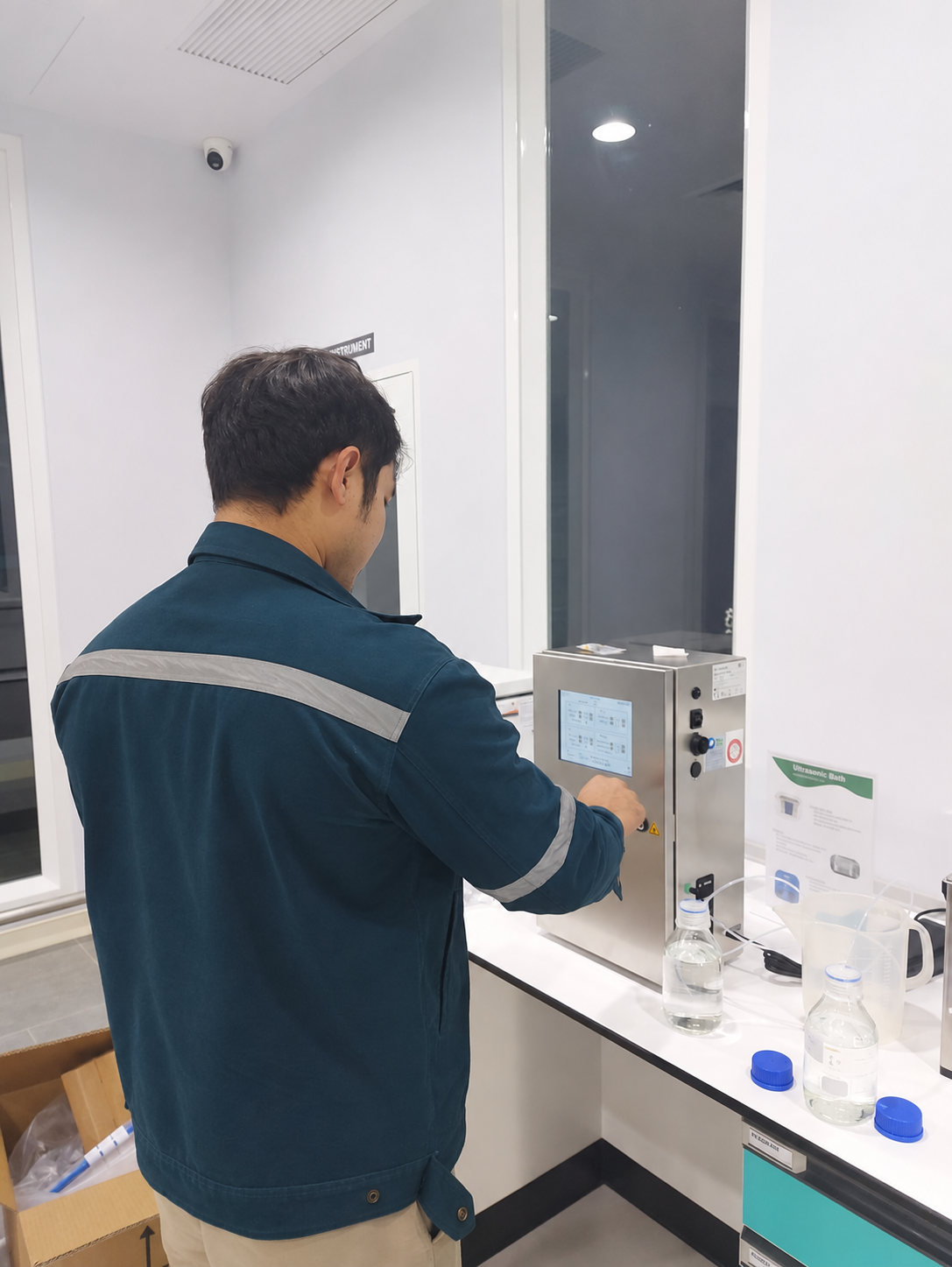
2. Who services it, and how fast?
A warranty tells you what is covered. It does not tell you how quickly someone will arrive. In a hospital, every day a system is down means delayed patients. In a lab, it can mean missed deadlines or failed audits.
What good looks like: service terms and response times agreed upfront, ideally set out in the tender or service contract, with trained engineers who know the equipment.
ITS has more than 110 service engineers based across our seven Southeast Asian markets, so support comes from engineers in your own country.
3. What will it cost to keep it running?
The purchase price is only the start. Most equipment needs regular preventive maintenance and calibration to stay accurate and compliant over many years of use. Warranty and service terms vary by manufacturer and product, so ask what is covered, for how long, and what comes after, so the running cost is clear from the start.
What good looks like: a clear view of maintenance, calibration and service options over the life of the equipment, before you sign.
4. How will your team be trained?
A short handover on installation day is rarely enough. Laboratory teams often need applications support and method development, not just basic operation. Hospitals need clinical applications training for users, and technical training for their in-house biomedical engineers.
What good looks like: a training scope agreed upfront (often set in the tender, such as one full day or two sessions, depending on the equipment), delivered by a product or applications specialist.
Across the region, ITS has 30 application specialists who support customers with applications and method development beyond the installation day.
5. Does the quote match what you actually need?
Many purchases start with a User Requirement Specification (URS), a list of what the equipment must do and the conditions it will work in. Check each quote against it line by line, not just the model number. Two quotes for the same model can include different configurations, accessories and services.
What good looks like: a quote that maps clearly to your URS, with any gaps or exclusions stated upfront.
Often left out of the quote
A cheaper quote can become the more expensive project once missing items are added back. Check whether these are included:
- Consumables and accessories needed for your applications
- Software licences and future updates
- Calibration and preventive maintenance after the warranty ends
- Relocation, upgrades and end-of-life support
Buying through a tender?
Many public hospitals and universities in the region buy through tenders where price carries the most weight. Writing service terms into the specification helps you compare bids like for like: response times, preventive maintenance, training hours, qualification documents and warranty length.
Why This Matters
Scientific and medical equipment is a long-term investment. The real value is decided over years of use, not on the day of purchase. For laboratories and hospitals across Southeast Asia, a supplier with experienced local engineers and application specialists can be the difference between equipment that performs and equipment that waits.
For close to 50 years, ITS Science & Medical Group has worked alongside customers across the region to look beyond the specification sheet. Today, our team of more than 550 people across seven markets includes over 110 service engineers and 30 application specialists. This article is the first in our “Beyond the Spec Sheet” series, where we explore the questions behind good equipment decisions, from the lab to the ward.
Frequently Asked Questions
Why can two quotes for the same equipment model be so different in price?
Quotes for the same model can include different configurations, accessories, software, installation scope, training and service terms. Comparing them line by line against your requirements shows whether the difference is in the price or in what is included.
What is IQ/OQ?
Installation Qualification (IQ) and Operational Qualification (OQ) are documented checks that confirm equipment is installed correctly and operates as specified. Laboratories working to ISO/IEC 17025 or GMP typically need these documents for audits.
What is a User Requirement Specification (URS)?
A URS sets out what the equipment must do and the conditions it will operate in. It gives buyers a clear basis for comparing quotes, and for checking that what is delivered matches what was needed.
Does ITS Science & Medical Group provide installation and service across Southeast Asia?
Yes. ITS has more than 110 service engineers and 30 application specialists across Singapore, Malaysia, Indonesia, Thailand, Vietnam, the Philippines and Cambodia, supporting laboratories and hospitals from installation through to long-term service.
Planning a new equipment purchase? Talk to our team about what your project really needs.
ITS Science & Medical Group operates across seven Southeast Asian markets. Learn more at one-its.com